

PIR panels in Istanbul, Turkey
A PIR panel is an enhanced version of the polyurethane (PUR) panel, designed to offer superior fire resistance and thermal insulation performance. It belongs to the same family of foams, but thanks to its isocyanurate structure, it offers better fire resistance and lower thermal conductivity. As a manufacturer in Turkey, we produce both PUR and PIR panels; in this article, we explain the key differences between the two and when you should choose a PIR panel.
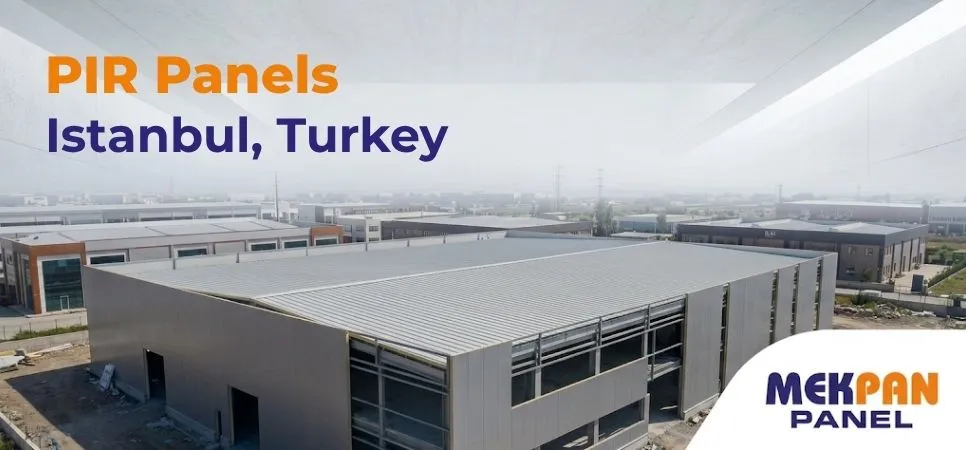
What is a PIR panel in Turkey?
PIR, which stands for polyisocyanurate, is a rigid foam insulation material. When this foam is injected between two metal sheets, a PIR sandwich panel is manufactured. Chemically, it is very similar to polyurethane; the difference lies in modifying the formulation ratio to incorporate isocyanurate rings into the structure. This small difference significantly improves the panel’s fire performance and its resistance to high temperatures.
What is the difference between PIR and PUR panels?
PUR and PIR belong to the same family of foams and are difficult to distinguish by sight. PIR has a more stable chemical structure, withstands high temperatures better and is self-extinguishing in the event of a fire. PUR, on the other hand, is more economical and is more than adequate for projects with standard insulation requirements. In short, PIR is an upgraded version of PUR: the same lightness, but with greater safety. You can also find the technical differences between the two in our article on rigid polyurethane foam.
Need High-Performance PIR Panels for Your Project?
Get price quotes and specific technical specifications for your orders directly from Mekpan Panel.
Get a Custom Quote →Fire resistance of PIR panels
Fire resistance is where PIR excels. When exposed to flames, a thin carbon layer (char) forms on the surface of the foam. This layer insulates the material beneath and slows the spread of the flame through the panel; in PUR, this protective mechanism is weak. Rock wool panels, on the other hand, provide the highest level of safety as they are Class A1 non-combustible materials, but they are heavier and more expensive. In projects where fire regulations are a requirement but the weight of rock wool is undesirable, PIR offers a balanced solution.
Thermal insulation and U-value of PIR panels
Istanbul PIR panel is one of the core materials with the lowest thermal conductivity on the market; its lambda value is approximately 0.022 W/mK. In practice, this means that you can achieve the same U-value with a thinner panel, meaning you save space while also reducing heating and cooling costs. This difference is particularly evident in cold stores and buildings where energy costs are a critical factor. You can refer to our article on thermal insulation materials for guidance on selecting the appropriate thickness and U-value.
Where are PIR panels used?
PIR panels are used wherever both insulation and fire safety are important. Cold stores and food processing facilities prefer PIR due to its low thermal conductivity. PIR panel Turkey is the preferred choice in factories and production facilities, in buildings subject to fire safety regulations, and in buildings aiming to achieve energy certification. For standard and budget-focused projects, PUR is suitable, whilst rock wool is more appropriate for structures where A1 fire resistance is mandatory. For product options, please visit our roof panels and cold room panels pages.
In summary, PIR panels go a step further in fire safety and insulation whilst retaining the lightness of PUR. To clarify questions such as whether PUR, PIR or rock wool is suitable for your project and what thickness is required, please contact our teams in Konya and Istanbul.